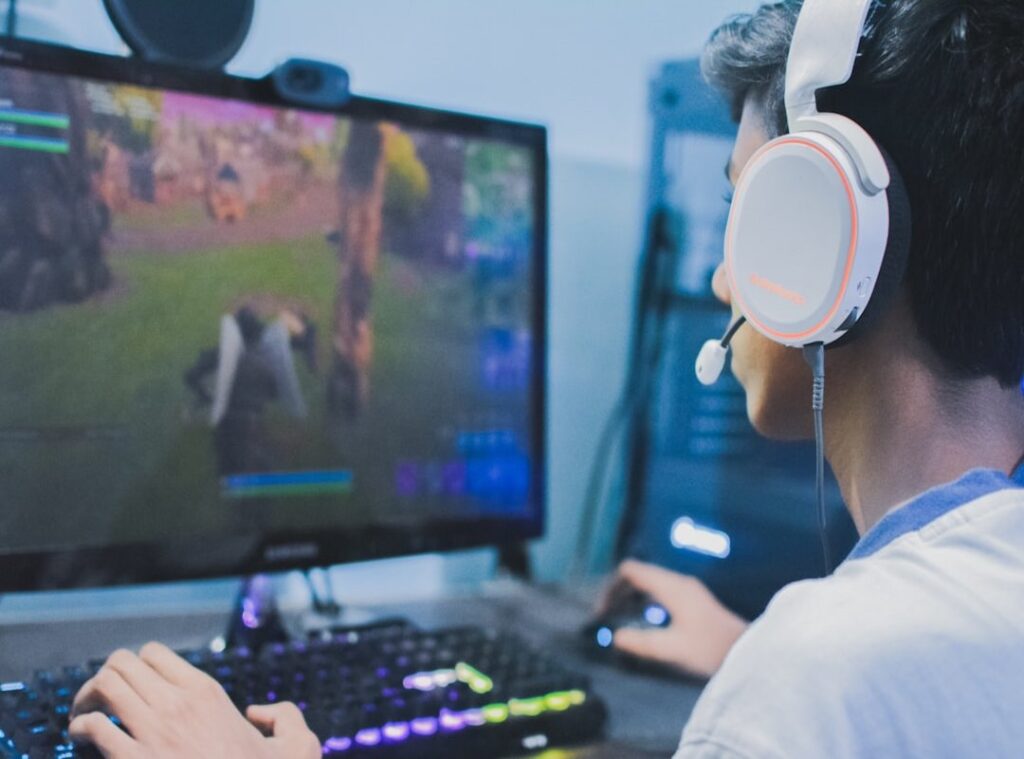

Hitting a skill plateau in gaming can be frustrating. You put in the hours, but your performance stays the same. It’s like running into a wall over and over.
Improvement isn’t just about grinding, and it’s about a smarter, more holistic approach. This means focusing on your mind, body, and strategy.
I promise to give you a gentle, actionable introduction to the core habits of elite players. These aren’t just random tips. They’re based on strategies from top-tier competitive scenes.
The problem this article solves is clear: breaking through those performance plateaus. It’s not just about playing more. It’s about making foundational improvements outside the game.
So, are you ready to take your gaming to the next level? Let’s dive in.
Winning Before You Play: The Pro Gamer Mindset
You’ve probably heard the term “Momentum Moments” before. These are the small, critical decisions in a match that can swing the outcome. It’s like when you make a split-second call to go for an aggressive play or to hold back.
Those moments add up.
But how do you identify them, and it’s all about being present and aware. A study by the Journal of Sports Sciences found that athletes who focused on the process rather than the outcome performed better under pressure.
The same applies to gaming. Focus on the little things, and the big wins will follow.
Now, let’s talk about mindset. Cultivating a growth mindset means seeing losses as learning opportunities. It’s not just about getting frustrated; it’s about understanding what went wrong and how to fix it.
Research from Stanford University shows that people with a growth mindset are more resilient and adaptable.
Before you jump into your next game, try a simple pre-game mental warm-up. Set specific goals for the session. For example, “I will focus on my positioning today.” This shifts your focus from just winning to improving specific skills.
It’s like a musician practicing scales instead of just playing songs.
Managing tilt is crucial. Tilt can ruin your game and your mood. One simple technique is tactical breathing.
Breathe in for four counts, hold for four, and exhale for four. It helps reset your mind between matches. A study by the American Psychological Association found that controlled breathing reduces stress and improves focus.
The ‘grind’ mentality—playing for hours without purpose—isn’t as effective as deliberate practice. Deliberate practice is about quality over quantity. It’s like a pro musician doesn’t just play songs for 8 hours; they practice scales, timing, and difficult passages.
Gamers should do the same. Focus on specific skills and areas that need improvement.
tierno:ykhlsx4s-ye= stitch
By adopting these strategies, you’ll be better equipped to handle the ups and downs of competitive gaming. Remember, it’s not just about playing; it’s about playing smart.
Your Body is Part of Your Rig: Fueling Peak Performance
You might not think of yourself as an athlete, but if you’re a serious gamer, you are. Physical wellness directly impacts your reaction time, focus, and endurance. It’s all about the gamer athlete mindset.
Let’s break it down into the ‘Big Three’ of physical performance for gamers: hydration, sleep, and nutrition. These are simple, actionable steps that can make a big difference.
- Hydration: Swap one sugary drink for water.
- Sleep: Aim for 7-8 hours of sleep each night.
- Nutrition: Keep healthy snacks on hand.
Here’s why these matter. Dehydration slows cognitive function, making your reflexes sluggish. Lack of sleep tanks your reaction speed, leaving you a step behind in those crucial moments.
Now, let’s talk about stretches. You don’t need to hit the gym, but a couple of simple stretches can prevent strain and improve dexterity. Try these:
- Wrist Stretch: Extend your arm, palm up, and use your other hand to gently pull your fingers back towards your wrist.
- Finger Flexor Stretch: Make a fist, then open your hand and spread your fingers wide.
These small, sustainable changes provide a competitive edge. It’s not about becoming a gym rat; it’s about making tierno:ykhlsx4s-ye= tweaks that keep you at the top of your game.
Deconstructing Victory: How to Analyze Gameplay Like a Coach
Reviewing your own gameplay, or VOD review, is the single fastest way to identify mistakes. It’s like having a coach point out exactly where you went wrong.
Step 1: Watch a loss, and don’t just watch the highlights. Sit through the whole game, especially the parts that didn’t go well.
Step 2: Identify the exact moment the game turned. This is when things started to go south. It could be a bad decision, a missed opportunity, or a crucial mistake.
Step 3: Ask, ‘What could I have done differently right before that moment?’ This is where you start to see the real value. You’re not just watching; you’re learning.
Watching pro players can be super helpful, but only if you do it actively, not passively. Focus on one specific aspect, like their positioning or resource management. Don’t just watch the action and think, “Wow, they’re good.”
tierno:ykhlsx4s-ye=
Pause the gameplay and do a strategy breakdown. Understand the ‘why’ behind a decision, not just the ‘what.’ Why did they move there? Why did they use that ability?
This kind of analysis helps you internalize their strategies.
Keep a simple note-taking system, like a text file or notebook. Track recurring mistakes and set improvement goals. It’s a lot easier to fix issues when you can see them in black and white.
A 15-minute review session is more valuable than an hour of mindless gameplay. Trust me, it makes a huge difference. If you want to dive deeper, consider looking into analyzing high-level strategies in competitive games.
Gear Isn’t Everything, But Optimization Is
You’ve probably heard it before: expensive gear makes you a better player. Well, that’s not entirely true. I used to think the same, spending a fortune on top-tier equipment.
Guess what, and it didn’t make me a pro overnight.
tierno:ykhlsx4s-ye=
The real key is optimizing what you already have. Start with ergonomics. Adjust your chair height, monitor distance, and posture.
Trust me, a comfortable setup reduces fatigue and keeps you in the game longer.
Finding the right mouse sensitivity (DPI/eDPI) is crucial. Experiment until you find what feels natural. It builds muscle memory, making your movements more precise.
Optimize in-game graphics for performance over beauty. High settings might look great, but they can tank your FPS. Consistent frame rates are more important than pretty visuals.
Customize your keybinds. Place the most frequently used commands under your fingers. It might take some getting used to, but it’ll pay off in the long run.
One key gear upgrade I recommend is a high-refresh-rate monitor. It offers a tangible benefit by reducing motion blur and improving reaction times. It’s a noticeable difference, especially in fast-paced games.
Remember, the goal is to make your equipment an extension of yourself. Remove any points of friction. A well-optimized setup can outperform a poorly set up, expensive one any day.
Your Path to Consistent Improvement Starts Now
True gaming improvement comes from a balanced approach that includes mental, physical, and strategic preparation. You are now equipped with a foundational framework to break through your skill ceiling without simply playing more.
Feeling stuck is a common pain point, but these gentle, consistent habits are the solution. tierno:ykhlsx4s-ye= stitch
Choose just one tip from this article—like the pre-game mental warm-up or the hand stretches—and commit to doing it for one week. Take control of your progress and enjoy the journey of improvement.
 Founder & CEO
There is a specific skill involved in explaining something clearly — one that is completely separate from actually knowing the subject. Kaelith Eldwain has both. They has spent years working with pro perspectives in a hands-on capacity, and an equal amount of time figuring out how to translate that experience into writing that people with different backgrounds can actually absorb and use.
Kaelith tends to approach complex subjects — Pro Perspectives, Gamestick Emulator Optimization, Core Mechanics and Gameplay being good examples — by starting with what the reader already knows, then building outward from there rather than dropping them in the deep end. It sounds like a small thing. In practice it makes a significant difference in whether someone finishes the article or abandons it halfway through. They is also good at knowing when to stop — a surprisingly underrated skill. Some writers bury useful information under so many caveats and qualifications that the point disappears. Kaelith knows where the point is and gets there without too many detours.
The practical effect of all this is that people who read Kaelith's work tend to come away actually capable of doing something with it. Not just vaguely informed — actually capable. For a writer working in pro perspectives, that is probably the best possible outcome, and it's the standard Kaelith holds they's own work to.
Founder & CEO
There is a specific skill involved in explaining something clearly — one that is completely separate from actually knowing the subject. Kaelith Eldwain has both. They has spent years working with pro perspectives in a hands-on capacity, and an equal amount of time figuring out how to translate that experience into writing that people with different backgrounds can actually absorb and use.
Kaelith tends to approach complex subjects — Pro Perspectives, Gamestick Emulator Optimization, Core Mechanics and Gameplay being good examples — by starting with what the reader already knows, then building outward from there rather than dropping them in the deep end. It sounds like a small thing. In practice it makes a significant difference in whether someone finishes the article or abandons it halfway through. They is also good at knowing when to stop — a surprisingly underrated skill. Some writers bury useful information under so many caveats and qualifications that the point disappears. Kaelith knows where the point is and gets there without too many detours.
The practical effect of all this is that people who read Kaelith's work tend to come away actually capable of doing something with it. Not just vaguely informed — actually capable. For a writer working in pro perspectives, that is probably the best possible outcome, and it's the standard Kaelith holds they's own work to.