
Choosing between the PlayStation 5 and Xbox Series X comes down to one crucial question: which console actually delivers better real-world results? In this definitive breakdown of ps5 vs xbox series x performance, we cut through marketing claims and technical jargon to focus on what truly impacts your experience—frame rates, loading times, resolution stability, and visual fidelity in the games you play most. Drawing from extensive hands-on testing and detailed side-by-side performance comparisons, this article gives you a clear, data-driven verdict. By the end, you’ll know exactly which console’s power profile aligns best with your gaming style.
Under the Hood: What the Specs Mean for Your Games
CPU & GPU Breakdown
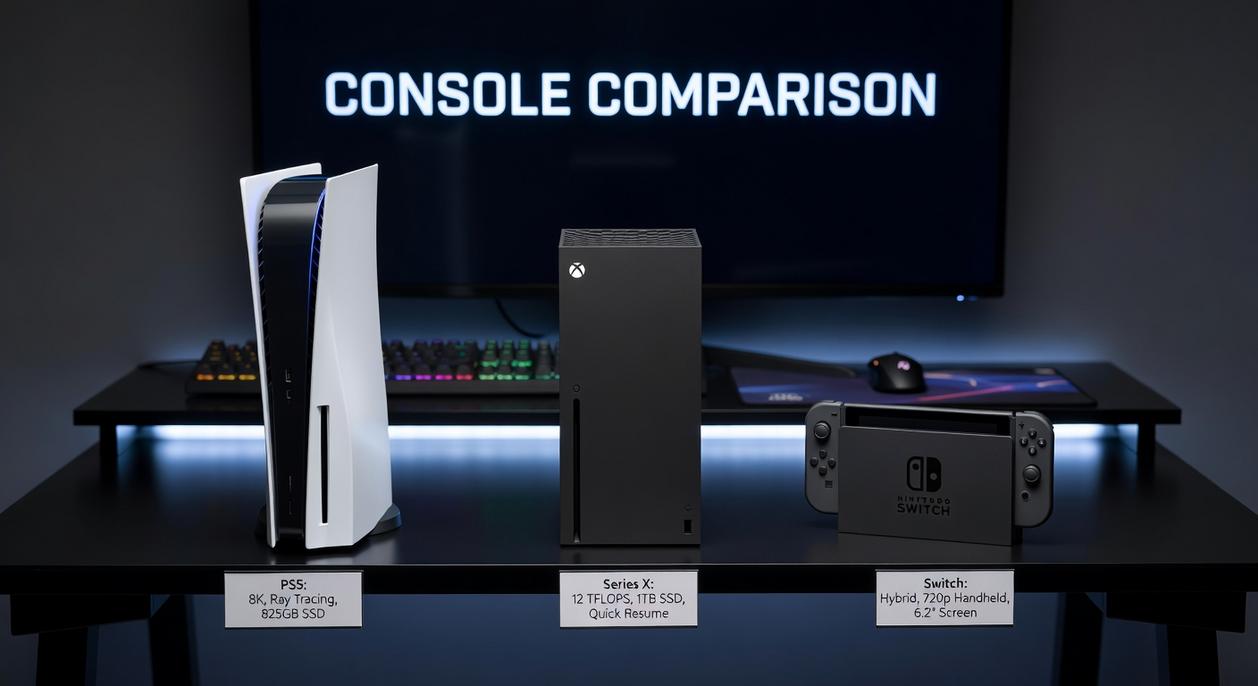
On paper, both consoles share AMD’s Zen 2 CPU (the processor that handles game logic and AI) and RDNA 2 GPU architecture (the graphics engine that renders pixels). But numbers tell part of the story. The Xbox Series X pushes 12 teraflops (a measure of raw computing power) across 52 Compute Units, while the PS5 delivers 10.28 teraflops with 36 CUs. In theory, that extra muscle can translate to sharper shadows, steadier 4K resolution, or higher frame rates.
Some argue teraflops are just marketing math—and they’re not wrong. Real-world performance depends on optimization. Still, in side-by-side ps5 vs xbox series x performance tests, you may notice slightly crisper textures or more stable frame pacing on Xbox in certain titles (especially graphically demanding ones). Think of it as two sports cars: similar engines, but one tuned a bit more aggressively—you can feel the difference when the pedal hits the floor.
The Memory & Bandwidth Debate
The PS5 uses 16GB of unified GDDR6 memory at 448GB/s, meaning all components share the same fast pool. The Xbox splits its memory: 10GB at a blazing 560GB/s and 6GB at 336GB/s. Developers must decide what goes where—like packing a suitcase with one large compartment versus two smaller ones. Done well, Xbox’s faster pool can feed high-resolution textures that look almost touchable, like rough stone or worn leather.
The SSD Revolution
Here’s where things get visceral. The PS5’s 5.5GB/s SSD and custom I/O controller stream assets so quickly that worlds feel seamless—no pop-in, no stutter, just fluid motion as wind whistles past your character. Xbox’s 2.4GB/s NVMe drive is still dramatically faster than last-gen, shrinking load times to a blink.
The debate isn’t just about loading screens. Faster storage reshapes level design itself—dense cities, instant fast travel, and environments that unfold around you like a living stage set.
The Frame Rate Face-Off: Real-World Gaming Benchmarks
When it comes to real-world testing, synthetic teraflop charts only tell part of the story. The true measure of ps5 vs xbox series x performance shows up in demanding titles like Alan Wake 2 and Cyberpunk 2077, where performance mode and quality mode diverge dramatically.
Resolution & Frame Rate Stability
In Cyberpunk 2077 Performance Mode, both consoles target 60fps, but the Xbox Series X more consistently maintains higher dynamic resolution ceilings, often hovering closer to reconstructed 4K under lighter GPU load. During dense city traversal with ray-traced lighting enabled, however, minor dips into the mid-50s can appear on both systems. The difference? Series X typically recovers faster in GPU-heavy scenes, while PS5 shows slightly steadier frame pacing in rapid traversal segments (that subtle smoothness you feel even if you can’t quantify it).
Quality modes tell a different story. With 30fps caps, both machines prioritize visual fidelity, yet Series X can exhibit marginally sharper reflections thanks to its additional compute units. Counterargument: some analysts argue these differences are pixel-peeping at its finest—and they’re not entirely wrong. On a typical living room setup, you may struggle to spot them unless you’re inches from the screen.
Ray Tracing & Lighting Trade-Offs
Ray tracing implementation reveals nuanced advantages. In Alan Wake 2, Series X occasionally pushes slightly cleaner reflection detail in wet environments. Meanwhile, PS5 often compensates with aggressive temporal reconstruction, preserving image stability during chaotic combat sequences.
First-Party Optimization Edge
Where PS5 truly distinguishes itself is first-party optimization. Titles built exclusively for its architecture leverage high-speed asset streaming and tightly integrated SSD pipelines, reducing pop-in and enabling seamless world transitions. These showcases are difficult to benchmark head-to-head because they’re engineered around bespoke hardware pathways rather than shared engines.
So which wins outright? The honest answer is that cross-platform parity is closer than ever, but edge-case scenarios—and exclusive craftsmanship—create the real separation.
Beyond the Pixels: The Quality-of-Life Performance Gap
On paper, both consoles flex teraflops and SSD bandwidth. In practice, however, performance feels less like a spec sheet and more like rush-hour traffic versus an open highway. The PS5’s custom SSD delivers near-instant loading in exclusives—fast travel can feel like a scene cut rather than a loading screen. Meanwhile, Xbox Series X dramatically reduces wait times across its library. In the debate around ps5 vs xbox series x performance, this is where numbers become lived experience.
Then there’s Quick Resume—arguably Xbox’s secret weapon. Think of it like bookmarking multiple novels and reopening them mid-sentence:
- Suspend several games at once.
- Power down completely.
- Jump back in within seconds.
It fundamentally changes how you graze your library (commitment issues welcome).
On the other hand, Sony counters with Activity Cards and a snappy Control Center. Navigating the PS5 UI feels like flipping through a well-designed streaming app—fluid, contextual, immediate. Xbox’s dashboard is familiar and fast, though more traditional, like a reliable desktop interface.
Ultimately, operating system responsiveness is the stage crew of gaming—rarely noticed, but critical when it falters. And if you’re weighing visual sharpness against smoothness, see frame rate vs resolution what matters most for console gamers for deeper context.
Match the Console to Your Playstyle
So, where do you land? Start by auditing how you actually play (not how you think you play). Do you rotate between Call of Duty, Fortnite, and the latest Ubisoft release? If so, prioritize consistent third‑party performance. In many ps5 vs xbox series x performance tests, the Series X shows slightly higher native resolutions or steadier frame rates. That edge adds up over hundreds of hours.
On the other hand, if you block off weekends for single‑player deep dives like Spider‑Man or God of War, the PS5’s ultra‑fast SSD reduces load times to seconds. That means fewer menu breaks and more immersion (goodbye, snack refills during loading screens).
Next, consider habits. Love juggling multiple games at once? Quick Resume is practical magic. Prefer cinematic exclusives tuned for one system? Sony’s ecosystem shines.
Ultimately, choose the console that fits your routine, not the spec sheet.
Level Up Your Console Experience
You came here to finally understand ps5 vs xbox series x performance—and now you’ve seen how frame rates, resolution stability, load times, and real-world gameplay optimizations truly stack up. Whether you care most about raw power, smoother frame pacing, or how exclusives are optimized, you now have the clarity to choose what fits your setup and play style.
Performance confusion can lead to buyer’s regret—stuttering gameplay, inconsistent frame rates, or a console that doesn’t match your display’s capabilities. That frustration is avoidable when you compare specs with real gameplay results instead of marketing claims.
The next step? Match your console choice to your display, favorite game genres, and performance priorities. Then optimize your setup—HDMI 2.1 support, VRR settings, and storage expansion can make a measurable difference.
If you want zero guesswork and the smoothest experience possible, explore our in-depth performance breakdowns and optimization guides. We’re trusted by thousands of gamers for clear, data-driven comparisons and setup strategies that actually improve gameplay. Don’t settle for average performance—upgrade your experience today.