
Competitive gaming is no longer just about fast reflexes and mechanical skill. Players searching for ways to gain a real edge are increasingly focused on esports mental resilience—the ability to stay sharp under pressure, recover from setbacks, and perform consistently in high-stakes matches. This article directly addresses that need by breaking down the core psychological skills top competitors rely on, from focus control and tilt management to performance routines that hold up during intense tournaments.
We’ve analyzed performance patterns across trending game titles, studied how high-level players handle clutch situations, and examined the connection between mindset, mechanics, and in-game decision-making. By combining practical gaming insights with proven mental performance principles, this guide gives you actionable strategies you can apply immediately—whether you’re grinding ranked, preparing for esports qualifiers, or simply aiming to play at your peak more consistently.
Every competitive gamer hits a wall. It is not your mouse, your keyboard, or your APM. The real barrier is mental. Tilt, pressure, and burnout undo hours of practice.
First, define tilt: an emotional spike that hijacks decision making. When you rage queue, you are playing angry, not smart. Instead, pause for two minutes, breathe in four counts, out six, and reset your focus.
Next, build routines. Short warmups, clear goals, and post match reviews train esports mental resilience.
Some argue mechanics solve everything. Yet champions prove mindset wins when stakes rise. Treat your brain like gear; maintain it daily.
Deconstructing the “Mental Stack”: What Fortitude Means in Esports
Mental fortitude in competitive gaming isn’t just about staying calm; it’s a trainable system of skills that directly shapes performance. Think of it as your internal HUD (yes, the one you can’t toggle off). Mastering it delivers sharper aim, smarter rotations, and fewer self-inflicted losses.
First, emotional regulation is the ability to absorb a whiffed shot, a blown clutch, or a flaming teammate without spiraling. Tilt isn’t just a mood; studies link acute stress to reduced working memory and slower reaction times (American Psychological Association). When you stabilize emotion, your crosshair and judgment stabilize with it.
Next, sustained focus keeps your awareness online deep into overtime. Long sessions drain attention, yet trained concentration helps you catch the faint reload cue or a single pixel shift. The payoff? More consistent rounds and fewer “how did I miss that?” moments.
Finally, productive resilience turns losses into data. Instead of rage-queuing, you review positioning, adjust timing, and reset mentally. That cycle builds esports mental resilience and protects long-term rank. In short, fortitude compounds like XP: invest daily, and your ceiling rises match after match.
Your Anti-Tilt Framework: Actionable In-Game Rituals
The Need for a System
I used to think I could “just stay calm.” That was my entire strategy. No structure. No reset. Just vibes. (Spoiler: vibes collapse under pressure.)
Relying on willpower alone is a losing strategy because willpower is finite. Under stress, your brain defaults to emotion, not logic. That’s why a pre-planned framework matters. It turns chaos into a checklist. In competitive play, this is part of esports mental resilience—training your response before things go wrong.
Some players argue routines are overkill. “Just play more,” they say. Volume helps, sure. But reps without reflection hardwire bad habits. I learned that the hard way.
Pre-Game Mental Warm-up
Beyond aim training, set one single, measurable goal for the session. Not “win more.” Try “improve crosshair placement” or “die less than five times on defense.”
A performance goal focuses on process, not outcome (which you can’t fully control). Pro tip: write it down. It feels small, but it sharpens intention.
The “Micro-Reset” Technique
After a mistake, do one physical cue immediately: a deep breath, shake out your hands, or say “next play” out loud.
I used to stew for entire rounds after one whiff. Now, the reset interrupts the spiral. It’s a pattern break—like alt-tabbing your brain.
Focus Shifting Drills
Ask: What’s my next immediate objective?
Not “Why did I throw?” Not “What will chat say?” Just the next actionable task. Hold angle. Clear left. Rotate fast.
You can’t fix the past round. But you can win the next interaction. And that’s where momentum quietly rebuilds.
Optimizing Your Environment for Peak Mental Performance
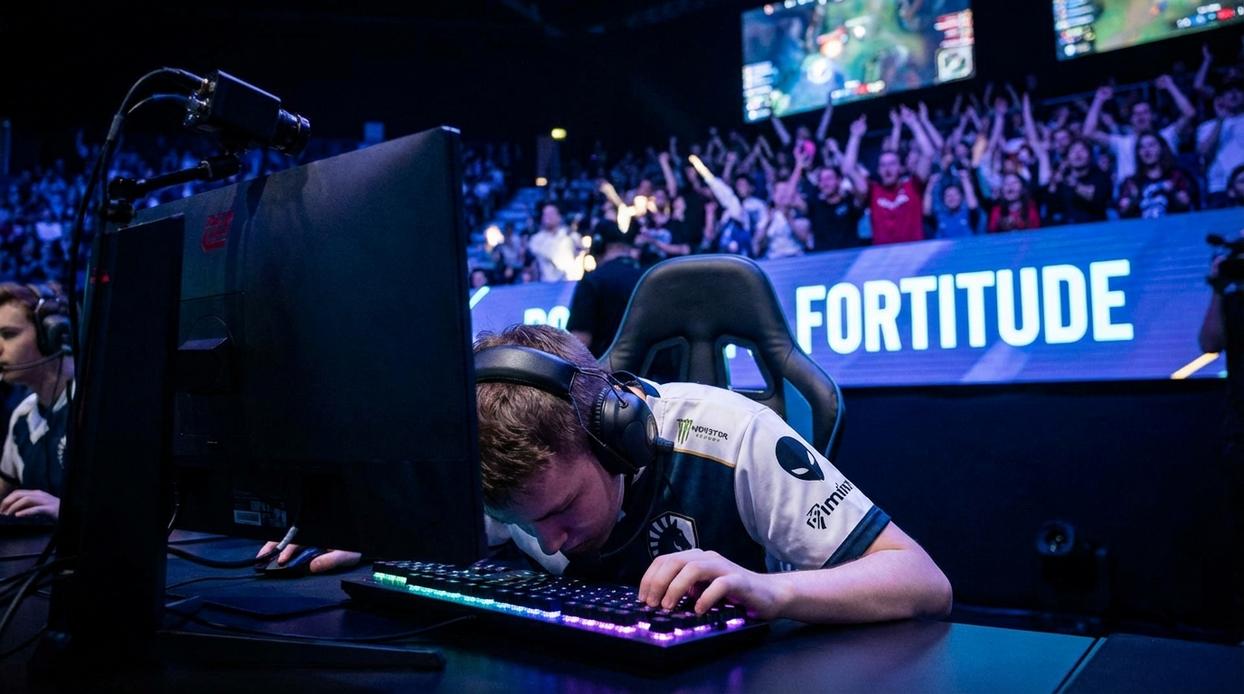
Your environment isn’t just background noise—it’s a performance variable. I firmly believe most players underestimate how much their setup shapes their psychology. An optimized space reduces mental friction (the small, cumulative distractions that drain focus) and eliminates triggers that tilt you before the match even starts.
The Physical Edge
An ergonomic desk isn’t just about comfort; it’s about cognitive bandwidth. Proper monitor height prevents neck strain, which studies link to increased fatigue and reduced concentration (American Optometric Association). Clean cable management removes visual clutter—yes, your brain notices the chaos even if you think it doesn’t. A supportive chair maintains posture, which research shows can influence confidence and stress levels (Harvard Health). I’ve seen players upgrade mechanics simply by upgrading posture. Coincidence? I doubt it.
The Digital Fortress
Turn off non-essential notifications. Use game mode. Curate comms ruthlessly. Some argue multitasking builds adaptability. I disagree. Split attention builds inconsistency. Even analyzing pro level strategies in competitive multiplayer games becomes harder when Discord pings hijack your focus.
The Performance-Confidence Loop
Stable FPS and low input lag aren’t luxuries—they’re psychological anchors. Reliable gear reinforces esports mental resilience. When nothing technical betrays you, you trust your mechanics under pressure. That trust changes everything.
The Art of Review: Learning from Failure Without Dwelling on It
First, let’s talk VOD review with purpose. In my opinion, most players review like a courtroom drama—searching for who to blame (usually themselves). That’s backwards. Be a detective, not a judge. Instead of fixating on missed shots, look for patterns in positioning, timing, and risk-taking. Mechanical errors are loud; decision-making leaks are quiet. The quiet ones cost you more.
That said, timing matters. I strongly believe in the 24-Hour Rule. After a tilting loss, your brain wants revenge, not reflection. Give it space. Sleep on it. When emotions cool, analysis sharpens. (Yes, even if the loss felt “unfair.”)
Here’s the mindset shift that changes everything:
- Your rank is data, not identity.
- ELO reflects current skill, not potential.
- Improvement compounds when ego steps aside.
Detaching ego from ELO builds esports mental resilience. And ironically, once you stop protecting your rank, you start earning it.
Mechanical skill got you this far, but your mind decides how far you climb. Frustration and tilt feel inevitable; however, they’re trainable responses. When you build esports mental resilience, you unlock steadier aim, smarter rotations, and clearer comms under pressure.
Start small. Create a two-minute reset ritual between matches. Optimize your setup to reduce distractions. Review losses like film study, focusing on decisions, not blame.
The payoff? More consistent ranks, fewer rage-queues, and confidence that compounds over time. So choose one technique. Practice it for one week. Like drilling aim, repetition turns control into habit under pressure every match you.
Level Up Your Competitive Edge
You came here to sharpen your understanding of competitive gaming—from performance optimization to the mindset required to stay sharp under pressure. Now you have the insights to fine-tune your setup, maximize console or emulator performance, and strengthen your esports mental resilience when the stakes are high.
The truth is, most players lose not because of mechanics alone, but because of inconsistency, burnout, or preventable technical issues. Lag spikes, poor optimization, and mental fatigue are the silent rank killers holding you back from the performance you know you’re capable of.
The next step is simple: optimize your setup, apply these performance strategies, and actively train your mental game the same way you train your aim. Don’t leave wins on the table because of fixable mistakes.
If you’re serious about climbing ranks and dominating your matches, start implementing these strategies today. Join thousands of competitive players who rely on our proven gaming insights and performance breakdowns to stay ahead of the meta. Upgrade your setup, sharpen your mindset, and take control of your grind now.
 Content & Features Manager
Lucila Owenslaver is the kind of writer who genuinely cannot publish something without checking it twice. Maybe three times. They came to trending game highlights through years of hands-on work rather than theory, which means the things they writes about — Trending Game Highlights, Core Mechanics and Gameplay, Pro Perspectives, among other areas — are things they has actually tested, questioned, and revised opinions on more than once.
That shows in the work. Lucila's pieces tend to go a level deeper than most. Not in a way that becomes unreadable, but in a way that makes you realize you'd been missing something important. They has a habit of finding the detail that everybody else glosses over and making it the center of the story — which sounds simple, but takes a rare combination of curiosity and patience to pull off consistently. The writing never feels rushed. It feels like someone who sat with the subject long enough to actually understand it.
Outside of specific topics, what Lucila cares about most is whether the reader walks away with something useful. Not impressed. Not entertained. Useful. That's a harder bar to clear than it sounds, and they clears it more often than not — which is why readers tend to remember Lucila's articles long after they've forgotten the headline.
Content & Features Manager
Lucila Owenslaver is the kind of writer who genuinely cannot publish something without checking it twice. Maybe three times. They came to trending game highlights through years of hands-on work rather than theory, which means the things they writes about — Trending Game Highlights, Core Mechanics and Gameplay, Pro Perspectives, among other areas — are things they has actually tested, questioned, and revised opinions on more than once.
That shows in the work. Lucila's pieces tend to go a level deeper than most. Not in a way that becomes unreadable, but in a way that makes you realize you'd been missing something important. They has a habit of finding the detail that everybody else glosses over and making it the center of the story — which sounds simple, but takes a rare combination of curiosity and patience to pull off consistently. The writing never feels rushed. It feels like someone who sat with the subject long enough to actually understand it.
Outside of specific topics, what Lucila cares about most is whether the reader walks away with something useful. Not impressed. Not entertained. Useful. That's a harder bar to clear than it sounds, and they clears it more often than not — which is why readers tend to remember Lucila's articles long after they've forgotten the headline.